What active recall is and how to do it properly
Active recall is trying to remember without looking, then checking yourself. Why it beats rereading, and five ways to start today.
Key points
- Active recall is trying to remember or solve without looking, then checking.
- Retrieving a fact makes it stick better than reading it again, even if at first it feels like you're learning less.
- It works with tests, flashcards, open questions or a blank page, as long as you correct your mistakes and come back to them.
Active recall means studying by trying to remember or solve something without looking at your notes, then checking whether you got it right. It beats rereading because the effort of retrieving information is what makes it stick.
It's also called retrieval practice. Along with spaced repetition, it's one of the two best-evidenced techniques in all the research on studying.
Why it works
Every time you pull something out of memory, the path to it gets stronger. Rereading takes no such effort: the text is right there and everything looks familiar.
Roediger and Karpicke showed this in 2006. One group reread a text several times; another read it and then tried to write down what they remembered. Five minutes later, the rereaders remembered more. Two days and a week later, the students who had tested themselves were clearly ahead (Roediger & Karpicke, 2006).
A later meta-analysis confirmed the effect across dozens of studies (Rowland, 2014). And a review of research done in real classrooms, not just the lab, found consistent benefits (Agarwal et al., 2021).
The fluency trap
Rereading feels like knowing. Practising feels like not knowing. That's why so few people practise.
In Karpicke and Blunt's study, most students predicted they'd learn more from making concept maps. A week later, the ones who had practised recall did better, including on reasoning questions (Karpicke & Blunt, 2011).
If studying feels hard, you're on the right track. If everything flows, you're probably rereading.
Five ways to practise today
- The blank page. Close your notes and write down everything you remember about a topic. Then compare and mark what was missing.
- Tests. They make you tell similar options apart. Useful if your exam is multiple choice, and for spotting confusions. See how to prepare for a multiple-choice exam.
- Flashcards. For definitions, dates, formulas or vocabulary: short question, short answer. Say or write the answer before you flip the card.
- Open questions. Explain a concept in your own words, as in an essay exam. It's the most demanding kind of practice and the closest to many exams.
- Teach it to someone. If you can't explain it without looking, you don't know it yet.
How to correct so it counts
Practising without correcting only tells you how much you know. Correct yourself and you also learn:
- Check the right answer straight after your attempt.
- Classify the mistake: I didn't know it, I mixed it up with something else, or I misread the question.
- Come back to what you got wrong in your next session, not a month later.
How much to practise
There's no magic number of questions. A rule of thumb: spend at least as much time practising as reading, and shift that balance towards practice as the exam gets closer.
Active recall without the admin
The hard part of active recall isn't understanding it. It's keeping it up: writing the questions, marking yourself, noting your mistakes and remembering to go back to them. That's why most people end up rereading.
On PROXUS that work is already done. Tell it what you're studying and when, and upload your material, whatever it is: your notes, the slides, a scanned book or past papers. From there:
- Your exam prep is active recall from start to finish. Every lesson is a test, a set of flashcards, open questions, problems or a case, and every day you know what's next.
- There's always feedback. Tests explain every answer; on open questions, problems and cases, MagIA gives you a mark, tells you what's missing and shows you a model answer.
- Your mistakes come back. If a lesson goes badly, your prep flags it for review, and flashcards are reviewed with FSRSi within each session.
- MagIA is on every screen. If a question doesn't make sense, ask it right there, without switching screens.
If you're not sure which format suits your exam, read tests or flashcards next.
Sources
- Roediger, H. L. & Karpicke, J. D. (2006). Test-enhanced learning. Psychological Science, 17(3), 249–255.
- Karpicke, J. D. & Blunt, J. R. (2011). Retrieval practice produces more learning than elaborative studying with concept mapping. Science, 331(6018), 772–775.
- Rowland, C. A. (2014). The effect of testing versus restudy on retention: A meta-analytic review of the testing effect. Psychological Bulletin, 140(6), 1432–1463.
- Agarwal, P. K., Nunes, L. D. & Blunt, J. R. (2021). Retrieval practice consistently benefits student learning: A systematic review of applied research in schools and classrooms. Educational Psychology Review, 33, 1409–1453.
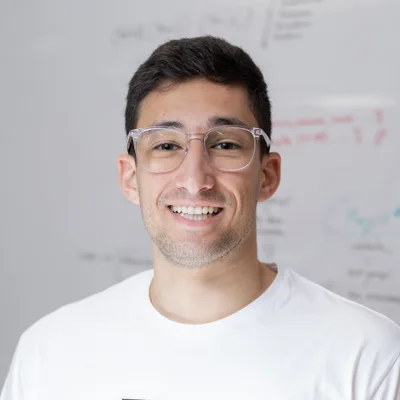
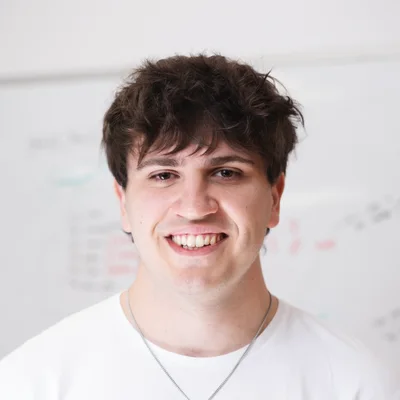
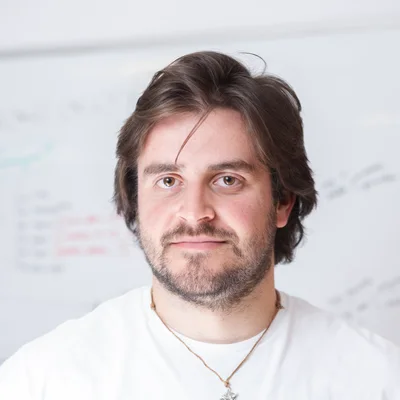
PROXUS team · Why we wrote this
The founders were classmates at Universidad Complutense de Madrid, and we built the first version of PROXUS to prepare for our own exams. We write what we'd have liked to read back then, backed by the research behind it, and we update the article when something changes.
Meet the team